Source Unfolding Plastic Garden Wheelbarrow for Tools, Industrial, Storage
Find 30 unfolding plastic garden wheelbarrow options with varying capacities and materials. Compare specifications like tray thickness, wheel size, and folding dimensions to select the right unit for tools, industrial, or storage applications.
Key considerations
Products List




Comprehensive Sourcing Guide
Strategic Sourcing Guide for Unfolding Plastic Garden Wheelbarrows
Understanding Product Variants and Core Specifications
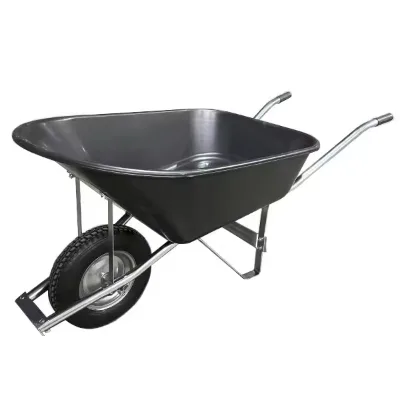
The market for garden wheelbarrows presents a distinct divergence between traditional heavy-duty steel models and the emerging category of lightweight, folding plastic units. When sourcing an "unfolding plastic garden wheelbarrow," buyers must first recognize that the term "unfolding" often overlaps with "folding" in industry catalogs, referring to the mechanism that allows the tray to collapse for storage. The supplied data indicates a specific product model, WB0201, which is constructed from plastic and features a tube thickness ranging from 0.5mm to 1.0mm. This thickness specification is critical for distinguishing lightweight garden tools from industrial-grade equipment, which often utilizes steel tubes with thicknesses of 2mm or greater.
The material composition is a primary differentiator. While the WB0201 model utilizes plastic for the main structure, other models in the supply chain, such as WB5204 and WB3800, are explicitly listed as steel. For a buyer specifically seeking a plastic unit, the focus must remain on the tray material, which can be plastic or metal depending on the specific configuration. The plastic variant offers significant advantages in weight reduction and corrosion resistance, making it ideal for residential gardens where the tool may be exposed to moisture and fertilizers. However, the structural integrity relies heavily on the frame design. The observed data notes a "Solid" wheel type for certain configurations, which implies a single-wheel design typical of wheelbarrows, though the "Wheel Amount" is listed as 1 for specific folding models.
Dimensions and storage capabilities are equally vital for the "unfolding" attribute. One specific standard listed is a folded size of 45 inches high by 13 inches wide, suggesting a compact profile for vertical storage. In contrast, other models list a folding size of 115x60x40cm and an unfolded size of 113x60x64cm. Buyers must verify that the "unfolding" mechanism is robust enough to support the intended load without the risk of accidental collapse during operation. The tray capacity varies, with some units listed with a water capacity of 60 liters and a sand capacity of 4 cubic feet, while others have a load capacity of 120kg. These figures are not universal; a plastic model with a 0.5mm tube thickness will likely have a lower load capacity than a steel model with a 2mm thickness.
Technical Performance and Material Integrity
When evaluating the technical performance of an unfolding plastic wheelbarrow, the surface handling and structural reinforcement are key areas of inspection. The supplied facts indicate that some units undergo "Powder Coating" or "Paint" surface treatments. While powder coating is often associated with steel to prevent rust, its application on plastic or hybrid frames suggests a specific aesthetic or protective finish. For a pure plastic unit, the focus should be on the UV resistance of the polymer and the structural rigidity of the folding joints.
The wheel specification is another critical technical parameter. The data lists a wheel size of 8x1.75 inches with a rubber material. This size is generally suitable for paved surfaces and smooth garden paths but may struggle on rough terrain or loose soil compared to larger pneumatic tires. The "Solid" wheel attribute suggests a maintenance-free option that will not go flat, which is a significant advantage for garden owners who may not have the tools or expertise to repair punctures. However, solid rubber wheels transmit more vibration to the user than air-filled tires, potentially causing fatigue during extended use.
The handle dimensions also play a role in user comfort and safety. One specification lists a handle thickness of 1.2mm, with a range of 1.2mm to 2.0mm noted as acceptable. The handle diameter is specified as 32mm. These dimensions are essential for ensuring a comfortable grip and sufficient leverage when lifting the load. Buyers should verify that the handle attachment points are reinforced, as the folding mechanism introduces potential stress points that could fail under heavy loads. The "Style" is consistently listed as "Unfolding" or "Folding," confirming the collapsible nature of the product, but the specific locking mechanism used to secure the unit in the open position must be robust to prevent accidental folding during transport.
Compliance, Certification, and Safety Standards
Navigating the compliance landscape for garden equipment requires careful verification of certifications and standards. The supplied data references several certifications, including ISO and CE. The presence of an ISO certification suggests that the manufacturer adheres to international quality management systems, which is a positive indicator of consistent production processes. Similarly, the CE mark indicates conformity with health, safety, and environmental protection standards for products sold within the European Economic Area. However, buyers must treat these as observations of specific listings rather than universal guarantees for every plastic wheelbarrow model.
The standard product model numbers, such as WB0201, WB5204, and WB6400-2, serve as unique identifiers for specific configurations. While the data lists these models, it does not explicitly link them to a specific safety standard like ISO9001:2015 or BSCI, though these are mentioned in the low-confidence background. Buyers should request proof of certification for the specific batch they intend to purchase. The origin of the products is consistently listed as Jiaonan Qingdao or generally as China, which is a major manufacturing hub for garden tools. This location data is useful for logistics planning but does not inherently dictate quality; the quality depends on the specific factory's adherence to standards.
For safety, the load capacity is a critical compliance metric. A model listed with a 120kg load capacity must be tested to ensure it does not deform or fail at that weight. The "Product Name" includes references to "South Africa Construction and Building Wheelbarrow," which implies that some units are marketed for heavy-duty construction use, potentially exceeding the requirements for light garden tasks. Buyers must ensure that the plastic unit they select is rated for the specific environment in which it will be used. Using a lightweight plastic wheelbarrow for heavy construction debris could lead to premature failure and safety hazards.
Cost Drivers and Pricing Structure Analysis
The pricing for unfolding plastic wheelbarrows is influenced by several factors, including material costs, manufacturing complexity, and order volume. The observed price range in the market is between 6.9 and 270 USD. This wide disparity reflects the difference between basic, lightweight plastic models and more complex, heavy-duty units with additional features like larger wheels, reinforced frames, or custom branding. The lower end of the range likely corresponds to simple plastic trays with minimal reinforcement, while the higher end may include hybrid steel-plastic models or those with premium certifications and packaging.
The Minimum Order Quantity (MOQ) is another significant cost driver. The observed MOQ range spans from 10 to 700 units. A buyer ordering a small quantity, such as 10 units, may face a higher per-unit cost due to the setup costs of the manufacturing line. Conversely, ordering closer to the upper limit of 700 units can significantly reduce the per-unit price. The data also notes a container quantity of 1700 pieces for a 40HQ container, which is a useful benchmark for calculating shipping costs for large orders.
Customization is listed as "Available," which can impact the final cost. Adding a specific brand logo, custom color, or unique packaging can increase the unit price and potentially the lead time. The "Brand" is listed as "as Your Need," indicating that many suppliers offer OEM services. Buyers should factor in the cost of tooling for custom molds if they require a unique design. Additionally, the packing method, whether "in Bulk," "in Pallet," or "in Carton," affects the shipping efficiency and cost. Carton packing is generally more expensive but offers better protection, while bulk packing is more cost-effective for large, sturdy shipments.
Typical Applications and Usage Scenarios
The versatility of the unfolding plastic wheelbarrow makes it suitable for a wide range of applications, from residential gardening to light industrial tasks. The "Usage" field lists "Tools, Industrial, Storage," highlighting its broad utility. In a residential setting, the lightweight nature of the plastic model makes it ideal for moving soil, mulch, leaves, and garden waste. The folding feature is particularly valuable for homeowners with limited storage space, as the unit can be collapsed to dimensions as small as 45x13 inches or 115x60x40cm.
For commercial and industrial applications, the load capacity becomes the primary consideration. While the plastic model may be sufficient for light landscaping tasks, heavy construction work might require the steel variants listed in the data, such as the WB5204 or WB3800 models. The "South Africa Construction and Building Wheelbarrow" designation suggests that some units are specifically designed for rugged environments. However, buyers must match the tool to the task; using a plastic wheelbarrow for heavy concrete mixing could result in structural failure.
The "Warranty" period of 1 year is a standard offering for many of these products, providing a baseline of protection for the buyer. This warranty typically covers manufacturing defects but may not cover wear and tear from misuse. The "Product Name" and "Usage" fields also indicate that these wheelbarrows are often used for storage and transport of various materials, including sand and water, as evidenced by the specific capacity listings. The solid rubber wheels are particularly beneficial for indoor or paved outdoor use, where puncture resistance is a priority.
Supplier Evaluation and Quality Control Protocols
Evaluating a supplier for plastic wheelbarrows requires a multi-faceted approach that goes beyond price comparison. The origin of the products, specifically Jiaonan Qingdao and China, indicates a concentration of manufacturing capability in this region. Buyers should verify the supplier's production capacity and their ability to meet the required MOQ. The "Qty" of 1700 pieces per 40HQ container suggests that suppliers have significant volume capabilities, which is beneficial for large-scale procurement.
Quality control is paramount, especially for products with folding mechanisms. Buyers should request samples to test the durability of the plastic, the strength of the folding joints, and the stability of the wheels. The "Surface Handling" of powder coating or paint should be inspected for uniformity and adhesion, even if the primary material is plastic. The "Tube Thickness" of 0.5mm to 1.0mm should be verified using calipers to ensure it meets the specified range, as variations can significantly impact load-bearing capacity.
Certification verification is another critical step. While the data lists ISO and CE certifications, buyers should ask for valid certificates for the specific products they are purchasing. The "Standard" product model numbers should be cross-referenced with the physical product to ensure consistency. Additionally, the "Customization" options should be clearly defined in the contract to avoid disputes over branding or packaging requirements. The "Warranty" terms should be explicitly stated, including the process for claims and the duration of coverage.
Long-Term Procurement and Lifecycle Management
Long-term procurement of plastic wheelbarrows involves considerations beyond the initial purchase price. The "Warranty" of 1 year provides a short-term safety net, but buyers should consider the expected lifespan of the product. Plastic components can degrade over time due to UV exposure and repeated folding/unfolding cycles. Buyers should inquire about the UV resistance of the plastic material and the durability of the folding mechanism.
Sustainability is an increasingly important factor in B2B procurement. The use of plastic, while lightweight and durable, raises questions about end-of-life disposal. Buyers should explore whether the supplier uses recyclable materials or offers take-back programs. The "Packaging" options, such as bulk or carton, also impact the environmental footprint of the shipment. Reducing packaging waste can lower shipping costs and improve the overall sustainability profile of the procurement.
Inventory management is another long-term consideration. The "Folding Size" of the wheelbarrow allows for efficient storage, reducing the space required in warehouses. This is particularly beneficial for retailers or distributors who need to store large quantities of product. The "Brand" customization option allows buyers to build a unique product line, which can enhance brand loyalty and market differentiation. However, buyers must balance the cost of customization with the potential return on investment.
Finally, the "Lead Time" and "MOQ" flexibility are crucial for supply chain resilience. While the data does not specify exact lead times, buyers should negotiate terms that allow for adjustments based on demand fluctuations. The ability to order in smaller batches or larger quantities as needed can help mitigate the risk of overstocking or stockouts. By focusing on these long-term factors, buyers can build a sustainable and efficient procurement strategy for plastic garden wheelbarrows.
Comparative Analysis of Product Specifications
To assist buyers in making informed decisions, the following table summarizes the key specifications observed in the supply data for different wheelbarrow models. This comparison highlights the variations in material, dimensions, and features that buyers should consider when selecting the right product for their needs.
| Feature | Model WB0201 | Model WB5204 | Model WB6400-2 | Model WB3800 |
|---|---|---|---|---|
| Primary Material | Plastic | Steel | Steel | Steel |
| Tube Thickness | 0.5mm ~ 1.0mm | 2mm | N/A | 1.2mm (1.2-2.0mm) |
| Wheel Type | Solid | Solid | N/A | N/A |
| Wheel Size | N/A | N/A | 8x1.75 inch | N/A |
| Wheel Material | N/A | N/A | Rubber | N/A |
| Style | Unfolding | N/A | N/A | N/A |
| Folding Size | 45" H x 13" W | N/A | N/A | 115x60x40cm |
| Unfolded Size | N/A | N/A | 113x60x64cm | 1310/550/490mm |
| Load Capacity | N/A | N/A | 120kg | N/A |
| Certification | ISO | CE | N/A | N/A |
| Origin | Jiaonan Qingdao | Qingdao, China | Qingdao, China | China |
| Packing | Bulk/Pallet | Bulk | Carton | Carton |
This table illustrates the diversity in the market. The WB0201 is clearly the lightweight plastic option, while the other models are steel-based with varying dimensions and capacities. Buyers must align these specifications with their specific application requirements to ensure optimal performance and value.
FAQs
What materials are used for unfolding plastic garden wheelbarrows?
The main tray material is plastic or metal, while frames often use steel tubes. Specific models like WB0201 feature plastic construction with tube thickness between 0.5mm and 1.0mm, whereas others utilize 2mm steel for heavier loads.
Can these wheelbarrows be customized with my brand logo?
Yes, customization is available for branding and design needs. Suppliers offer OEM services allowing you to specify your brand, color, and packaging requirements such as bulk, pallet, or carton packing for your specific order.
How much weight can a plastic garden wheelbarrow hold?
Load capacity varies by model, with some units rated for 120kg. Specific configurations list water capacity at 60 liters and sand capacity at 4 cubic feet, depending on whether the frame is plastic or steel reinforced.
What certifications do these wheelbarrow manufacturers hold?
Some listed products carry ISO and CE certifications indicating quality and safety compliance. Buyers should verify specific batch certifications as these are observations of certain listings rather than universal guarantees for every plastic model.
What is the typical minimum order quantity for these units?
The minimum order quantity ranges from 10 to 700 units depending on the supplier. Larger orders may fit 1700 pieces into a 40HQ container, which helps reduce per-unit costs significantly for bulk procurement.
Where are these wheelbarrows manufactured and shipped from?
Products originate from Jiaonan Qingdao and other locations in China. This region is a major manufacturing hub, offering efficient logistics for global shipping of both plastic and steel wheelbarrow variants.